By: Dior Pote, Head of Agronomy Seed Co Limited (Zimbabwe)
Wendy Madzura, Head of Agronomy Seed Co – Africa, Public Relations Manager Seed Co Limited (Zimbabwe)
The agriculture landscape in Zimbabwe is diverse, centered around key staple crops like maize, and major cash crops such as tobacco and cotton, alongside strategic industrial crops like soya bean and wheat and diverse array of horticulture crops. The sector is segmented into two main groups: the Large Scale Commercial Farmers (LSCF), who focus on high-volume commercial production, and the smallholder farmers (including A1 and communal farmers), who constitute the majority of the farming population and are crucial for both subsistence and national food security.
The outlook for the 2025/2026 rainfall season in Zimbabwe is for normal to above-normal cumulative rainfall across most parts of the country, setting the stage for a potentially second consecutive productive season. Effective crop production depends on timely management decisions, efficient input use, and the right choice of varieties. For Zimbabwean farmers, proper maize, soyabean, and wheat management coupled with selecting high-performing varieties is an essential practice that protects yields and maximizes profitability.
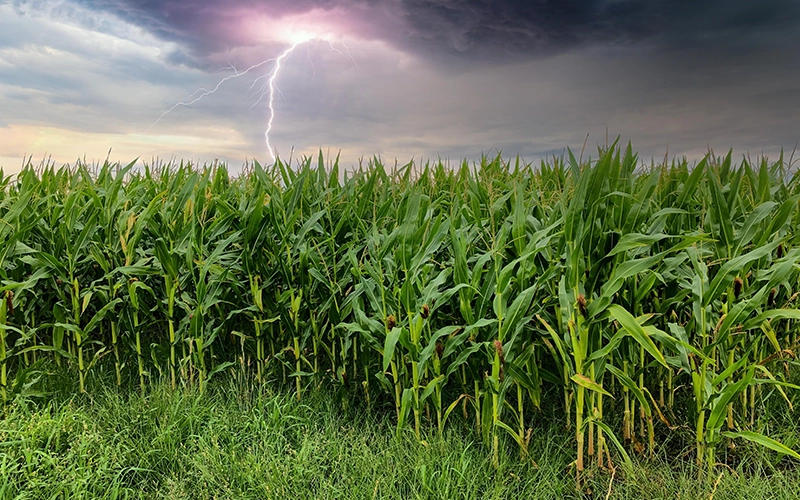
In maize production, the fall army worm (FAW) remains the most destructive pest from early to late vegetative stages. The most effective stage to control the FAW is the early larval stage (instars 1-3), specifically when the caterpillars are smaller than 1 cm. Young larvae feed on leaf surfaces making them vulnerable to insecticide control, whereas larger (4th-6th instar) larvae hide deep inside the plant’s whorl, shielded from chemical sprays.
FAW feeding results in extensive leaf damage causing window panning, irregular leaf holes, whorl damage, ragged leaf edges and stunted plant growth. . Weekly field scouting is the most effective management tool, checking for infestation, especially on leaves near the whorl. Regular scouting delivers clear benefits: it allows targeted pesticide application, reduces unnecessary input costs, prevents major pest outbreaks, and protects yield potential during critical growth stages. Control measures should be applied immediately when fresh damage or larvae are observed, using registered pesticides recommended for FAW control.
Apply insecticides early in the morning or late in the evening when larvae are most active on the plant surface. Top-dressing fertilizer application is best done during the early to mid-vegetative stage, when maize has its highest nitrogen demand. Nitrogen promotes leaf and stalk growth and strongly influences final yield. Phosphorus and potassium, usually applied at planting, support root development, water regulation, stalk strength, and disease resistance. Under heavy rainfall conditions, nutrient management must be adapted to minimize losses. Splitting nitrogen applications is highly recommended to improve efficiency and reduce leaching. Additionally, promoting field drainage through ridging or furrows can prevent water-logging and nutrient runoff. Harvesting excess water in farm ponds or tanks for later irrigation use can also enhance resilience against dry spells.
Three Critical Focus Areas for Maize Productivity
From the late vegetative phase through flowering, farmers must meticulously manage three interconnected areas:
1. Nutrient and Water Supply Synchronization
This is the period of maximum nutrient and water uptake. Any stress from drought or nutrient deficiency (especially nitrogen) during the two weeks before and after tasseling will severely impact pollination and kernel set, causing irreversible yield loss. Ensure soil moisture is adequate and nutrients are readily available.
2. Successful Pollination Management
The pollination stage is the single most critical period for determining final kernel number. Extreme heat, drought, or heavy rain during tasseling and silking can disrupt pollen viability, silk receptivity, and pollen shed. Maintain optimal plant health to ensure this brief, vital process succeeds.
3. Integrated Pest, Weed and Disease Pressure Control
Competition from weeds and damage from pests like FAW directly compromise the plant’s ability to develop a full, healthy ear. Effective weed control before the canopy closes and vigilant pest monitoring as described above are essential to ensure all the plant’s energy is directed toward grain production. Crop becomes more susceptible to foliar diseases like Common rust, Grey Leaf Spot, Northern Corn Leaf Blight at VT to R1 stages (onset of flowering). Application of broad spectrum systemic fungicides such as a combination of strobilurin and triazoles will keep the crop healthy through the grain production.
Selecting High-Performing Maize Varieties
To complement good management, variety choice is key. Seed Co offers flagship high-yielding varieties such as SC719 and SC727, which mature in approximately 150 days and are bred for reliability and performance under good agronomic practices. Additionally, the SC555 variety continues to be a farmer favorite due to its wide adaptability and consistent yield advantage within the 500 series.
For soybeans, early management determines final yield performance. Weed control is crucial at early stages, as young soybeans compete poorly with weeds. Achieving optimum plant population promotes rapid canopy closure, which suppresses weeds and conserves soil moisture. Soybeans generally meet their nitrogen needs through biological fixation, so excess nitrogen fertilizer should be avoided. Instead, good nodulation should be ensured through seed inoculation, especially in new soybean fields. Adequate irrigation during vegetative growth is essential, particularly for late-planted crops that face higher drought risk. In periods of heavy rain, ensuring proper field drainage is vital to prevent root diseases and nutrient leaching. Contour ridging and well-maintained drainage channels can help manage excess water. Furthermore, harvested rainwater stored during wet periods can provide a valuable irrigation source during reproductive stages, enhancing pod filling and yield stability. Disease management is equally important. Soybean rust poses a serious threat, especially to late-planted crops during the reproductive stage. Other diseases such as Septoria brown spot and frogeye leaf spot reduce photosynthesis and yield if left unmanaged. Regular scouting, monitoring national advisories, and timely fungicide application using multiple modes of action are key to disease control. Insects like soybean semi-loopers and green stink bugs that target pod formation needs regular monitoring and timely control at their early growth stages.
Soyabean Health and Variety Performance
The humid, wet conditions brought by good rainfall are a double-edged sword for soybeans, creating a perfect environment for fungal diseases like Bacterial pustule, Powdery mildew, Frogeye leaf spot, Septoria brown spot, and Cercospora leaf blight.
From Prevention to Cure
Preventative Fungicides (e.g., Strobilurins) form a protective barrier on the leaf surface. They must be applied before infection to stop spores from germinating and are most effective when disease-favoring weather is forecast. The most ideal stage for application is the R3 stage or beginning of podding when crop is more susceptible to diseases to protect the critical upper canopy, which contributes significantly to final yield.
Curative Fungicides (e.g., Triazoles) are absorbed into the leaf tissue and can halt an infection in its early stages, usually within 48–72 hours after spore germination.
Farmers can achieve outstanding results by integrating regular scouting, precise nutrient management, proactive disease control, and high-performing varieties. Proven Seed Co soybean varieties such as SC Spike, SC Serenade, SC Status, and SC Safari have demonstrated yields of 5 to 6 tonnes per hectare under recommended agronomic practices.
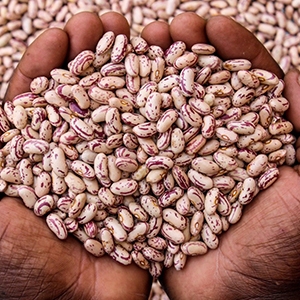
Currently, sugar bean planting continues and is a crop in season up to the end of January. Farmers can take advantage of this window by selecting high-performing varieties such as SC Bounty, SC Gadra, and SC Ukulinga, which can yield up to 3 tonnes per hectare under good management. Special attention should be given to weed, disease, and pest control to realize this potential. Bean stem maggots, cutworms, stink bugs and blister beetles are common insects that cause damage as early germination stage that needs to be kept under watch and controlled by pyrethroids and carbamates insecticides. Broad sprectrum systemic fungicides applied at bloom stage (R3) are crucial for the control and management of moulds, Anthracnose and Bacterial blights. During heavy rains, ensure fields are well-drained to prevent waterlogging, which can severely impact root health and nitrogen fixation. Simple water harvesting structures can also be used to capture runoff for supplemental irrigation during drier phases of crop development.
Looking Ahead: The New Blockbuster Variety SC W9104
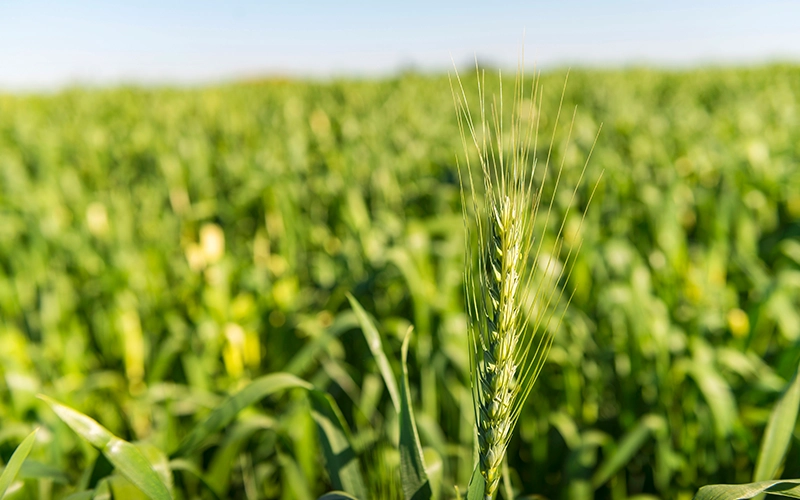
Wheat stands as a cornerstone of global, regional, and local food security, and its cultivation as a winter crop is of paramount importance. In Zimbabwe, winter wheat is sown from end of April to end of May, leveraging cooler temperatures to establish a robust root system and early vegetative growth to optimize on the growing conditions required at critical growth stages that include tillering, booting and heading. Timely planting enables early harvest which reduces pest and disease pressure ensures that pre-harvest sprouting is avoided.Pre-harvest sprouting caused by early summer rains may cause wheat quality deterioration rendering the flour unsuitable for bread baking.
In line with continuous improvement aimed at addressing changes in customer preferences hinged on over 85 years of experience, Seed Co is introducing a new wheat flagship variety, SC W9104. This blockbuster variety was bred to mitigate the effects of new diseases such as stripe rust (yellow rust, now prevalent in Zimbabwe), bring higher adaptability to environmental vagaries like warmer winters and especially to meet new consumer preferences, including superior white flour colour as well as enhanced yield potential and resilience. This variety is now available on the market and farmers are encouraged to embrace it in their cropping programs for the 2026 farming season.
Good genetics from Seed Co provide the essential blueprint, offering traits such as high-yield potential, disease resistance (e.g., against rusts), improved stress tolerance, and superior grain quality. These inherent qualities are then unlocked through good agronomic practices: precise seedbed preparation, balanced nutrient management (especially nitrogen), timely weed and pest control, and efficient water use. Ultimately, it is the synergistic integration of executive genetics such as the high-performing variety SC W9104. With SC W9104 sown at the perfect time and nurtured with science-driven management that maximizes crop performance, ensuring high and stable yields.
| Variety | Key Traits |
| SC W9104 (NEW) | High yielding variety (±10.5t/ha) |
| Medium to late maturity (±145 days) | |
| Excellent tolerance to rust diseases including yellow rust (stripe rust) | |
| Good milling and baking qualities including white flour, high protein content (>13%), High Falling number (>390 seconds), High Wet Gluten content (> 28%) and high test density (>80kg/hl) | |
| Moderate plant height (± 88 cm) for good standability | |
| Red grained with 1000 kernel weight of 46g | |
| SC Nduna | A high-yielding variety with potential of up to 10.5 tonnes per hectare. |
| Medium to late maturing, offering stability with late plantings. | |
| Adapted for soils with medium to high clay content. | |
| Offers moderate tolerance to Leaf Rust and Powdery Mildew. | |
| Known for good milling and baking qualities, with a grain protein content typically at or above 12%. | |
| SC Select | A very high-yielding variety that can achieve up to 10.5 tonnes per hectare. |
| Widely adapted, yielding high across all agro-ecological zones. | |
| Medium maturing, reaching physiological maturity in 135 to 140 days. | |
| Resistant to current Leaf Rust pathotypes. | |
| Excellent milling and baking qualities, with protein content at or above 12.7%. | |
| SC Serena | Another high-yielding variety, with a potential of up to 10.4 tonnes per hectare. |
| High-yielding across all agro-ecological zones, especially suitable for middle and low-veld areas. | |
| Late maturing, typically taking 145 to 150 days to reach maturity. | |
| Resistant to current Leaf Rust pathotypes. | |
| Characterized by moderate plant height, aiding in good lodging resistance. |
Strategic planning and informed decisions across maize, soyabean, sugar bean, and wheat production supported by Seed Co’s high-yielding, adapted varieties are essential to building resilient, profitable farming systems. Proactive adaptation to weather variability including optimizing nutrient management during heavy rains, ensuring effective drainage, and harvesting water for future use further strengthens resource efficiency. By combining sound management with the right seeds, farmers can reduce risk, enhance productivity, and secure better returns.


 Zimbabwe
 Seed Co Group
 Angola
 Botswana
 DRC
DRC Kenya
Kenya Malawi
 Nigeria
 Tanzania
 South Africa
 Uganda
 West & Central Africa
 Zambia